This post may contain affiliate links, which means I'll receive a commission if you purchase through my link, at no extra cost to you.If you're new here, welcome! Before we get started, grab my free Fill Your Spots Enrollment Audit. It walks you through the gaps that keep families from enrolling, so you can finally fill your open spots.
Now let's dive into how to manage difficult or upset daycare parents.
It was 5:30pm on a Friday and the lobby was full of parents. A mom walked in holding an ouch report. Her child had been bitten. Again. And she wanted to know who did it, right then, in front of everybody.
I did what most of us do when we feel attacked. I defended. I explained our policy and our ratios. And the louder she got, the more I explained. She left angrier than she came in.
That night I couldn’t sleep. But what I said to her the next morning turned her into one of the biggest supporters our center ever had. I’ll share it at the end of this post.
Difficult daycare parents were part of almost every single week in my 21 years as a childcare center director. You’re not doing anything wrong when these moments knock the wind out of you. Nobody hands childcare directors and daycare owners a script for them. So here are word-for-word scripts for the five toughest parent conversations, plus the one rule that works for all of them.
The One Rule for Every Difficult Parent Conversation: Never Have It in the Hallway
When a parent is upset at drop-off or pickup, other parents are listening, and so are the children. Nobody calms down with an audience, including you.
Your job in that moment is to move the conversation. Acknowledge the parent, and invite them somewhere private:
“I can see you’re really upset, and I want to give this my full attention. Let’s step into my office so we can talk privately.”
If you can’t talk right then, set a time, today if at all possible. That one move takes the heat out of most hard conversations with parents before they start.
1. What to Say When a Parent Asks Who Bit Their Child
The bite or injury report is the most common difficult parent conversation in childcare, and it’s emotional for good reason. Their child got hurt while in your care. Start there.
Parents almost always want to know who did it. You can’t tell them. Every child deserves that same privacy, including theirs. Instead, be honest about what happened and tell them what you’re changing. Then give them a specific day they’ll hear from you again.
“I completely understand why you want to know. If it were my child, I’d want to know too. To protect every child here, including yours, we don’t share other children’s names. I’ll be honest with you. Biting is really common at this age, especially when children don’t have the words yet for big feelings. So I can’t promise it will never happen again. But here’s what we’re doing about it. We’ve moved that child closer to a teacher during play, and we’re working with their family. I’ll check in with you on Friday to let you know how it’s going.”
Then document everything, from the ouch report to every conversation and what you promised in it. If that parent ever calls licensing, your records will save you.
2. When a Parent Wants Their Child’s Photo Removed From Social Media
This one is blowing up online right now. Most daycares post photos to attract families, and most have never thought through what happens when a parent says take it down.
You need a photo and social media release form for every child, signed at enrollment. Train your staff on it, too. Before anyone takes a picture for your page, they check the list of children with permission. Keep that list posted in every classroom, right next to the allergy sheet, so nobody has to guess.
When a parent asks you to take something down, you take it down the same day. No debate.
“Thank you for telling me. I’ll take that down today. I’m also updating your child’s file so we won’t post their photo going forward. If you ever change your mind, just let me know.”
This conversation goes smoothly when you say yes and fix your process. Their child, their choice.
3. How to Handle a Parent Complaint About a Teacher
This one is tricky, because you’re protecting two relationships at the same time.
Your first instinct is to defend your teacher. You know her, and you know how hard she works. But if you defend her in the first thirty seconds, the parent stops talking to you and starts talking to other parents.
Listen first. Thank them for telling you. Ask what happened, then tell them exactly what comes next and when they’ll hear back from you.
“Thank you for coming to me with this. I know that wasn’t easy. Can you walk me through what you saw, or what your child told you?”
(Let them finish.)
“Here’s what happens next. I’ll talk with her privately, and I may spend some time in the classroom myself. I’ll follow up with you by Wednesday.”
Then actually look into it. Talk to the teacher privately, one on one, since correction lands better in person than in a text. And call the parent back on Wednesday like you said. The follow-up call is what they’ll remember.
4. How to Say No to Policy Exceptions (Late Pickup Fees and Sick Policy)
Late pickup without the late fee. Bringing a child back with a fever because they have a big meeting. Every exception you make for one parent becomes the new policy for every parent who hears about it, and they always hear about it.
Be kind, and be firm. Point back to the daycare policy they signed, and tell them why it exists. A policy with a reason feels fair. A policy without one feels like a rule for the sake of rules. Keep the reason to one sentence, though. Any longer and you start to sound like you’re justifying yourself.
“I understand, and I wish I could make it work. Our policy is in place because [reason]. It applies to every family the same way, and that’s what keeps it fair for everyone. I hope you understand.”
Here’s how that sounds in two of the most common situations.
Late pickup fee:
“I completely understand. Traffic is rough sometimes, and I wish I could make it work. Our late fee is in place because when pickup runs late, a teacher has to stay past her shift, and we pay her for that time. It applies to every family the same way, and that’s what keeps it fair for everyone. I hope you understand.”
Fever and sick policy:
“I completely understand. I know how hard it is to miss work. Our policy is in place to keep all of the children and our teachers safe and healthy, because a fever can spread quickly through a classroom. Your child needs to be fever-free for 24 hours without medicine before coming back. It applies to every family the same way, and that’s what keeps it fair for everyone. I hope you understand.”
You can be warm about the traffic or the big meeting and still keep the policy. The kindness is in your tone, and the firmness is in the policy. I go deeper on this in my video on the art of saying no in your childcare business.
5. What to Do When a Parent Threatens to Leave or Report You to Licensing
This one hits hard. Your heart starts racing, and you want to fix it immediately. Or you want to fire back.
Slow down and take a breath. Most parents who threaten to leave are really asking to be heard, and when they feel heard, the threat usually fades. So let them finish talking before you say a single word. Then stay calm and say less. Don’t argue, and don’t beg.
Start with this script. It works whatever the parent is upset about:
“I can hear how frustrated you are, and I’m really glad you came to me. Can you tell me what happened?”
(Let them finish. Don’t interrupt.)
“Thank you for telling me. I want to make this right. Here’s what I’m going to do: [one specific action]. I’ll follow up with you by [day].”
Then add the line that fits the situation.
If they threaten to leave:
“I’d hate to see you go, and I want to understand what’s not working. What would need to change for this to feel right for your family?”
Then listen to the answer honestly. Sometimes it’s something small you can fix. Sometimes it’s something you shouldn’t change, like a policy that keeps every child safe or the way you run your program. That’s okay. You can hear them out without promising to do whatever it takes.
If they threaten to call licensing:
“You’re always welcome to contact licensing. That’s your right as a parent, and I’d never want you to feel like you can’t. I’d still love the chance to fix this with you first.”
If they’re right and you dropped the ball:
“You’re right. We should have handled that differently, and I’m sorry. Here’s what we’re changing so it doesn’t happen again.”
If they’ve already decided to leave:
“I’m sorry to see you go, and I understand. Thank you for trusting us with [child’s name]. Our door is always open if you ever want to come back.”
And here’s something I wish someone had told me earlier. It’s okay if a family leaves. Not every family is the right fit for your program, and that’s not a failure on your part. You don’t have to bend every policy or give up what you believe in to keep one family enrolled. When you do, your staff notice, and so do the families who follow the rules.
So let them leave with grace. Thank them, wish them well, and mean it. Sometimes the right fit for them is somewhere else. And you’d be surprised how many families come back.
After every one of these conversations, write it down: the date, what they said, what you said, and what you offered. Parents and staff do report childcare centers, sometimes over things that aren’t true. If your records are in order, a licensing visit is something you can handle. If you don’t have records yet, start today.
What I Said to That Upset Parent the Next Morning
Remember the mom from the lobby? Her child had been bitten for the second or third time, and I had spent our whole conversation explaining policy instead of listening.
The next morning, I met her at the door before drop-off and asked if we could talk in my office for a minute. Then I said:
“I’m sorry. Yesterday I explained when I should have listened. I cut you off, and I didn’t hear what you had to say. I completely understand why you were upset. If it were my child, I would have been upset too. You want your child to be safe here, and it’s devastating to pick them up and find out they’ve been bitten.”
Then I was honest with her. I told her biting is really common at this age, and that children bite for all kinds of reasons. They can’t find the words yet. They want a toy and don’t know how to share. They’re teething, or they’re angry.
I told her exactly what we were doing about it. We were keeping the child who bit within arm’s reach of a teacher, and we were meeting with that child’s parents to see what they could work on at home. And I told her the truth: I couldn’t promise it would never happen again, but I could promise we were doing everything we could to prevent it.
She saw my heart. She said, “You know what? You’re right. I overreacted. I know it’s not your fault, and I know you’re doing the best you can.”
From that day on, she was one of our biggest fans. Her child stayed with us all the way through preschool graduation.
That’s what changed everything. It wasn’t a better explanation of our policy. It was listening first, saying I’m sorry, and leading with empathy.
Quick Recap: How to Handle Difficult Daycare Parents
Difficult daycare parents get a lot easier when you have the words ready:
Never have the hard conversation in the hallway.
For injuries, be honest, and share what happened and what you’re changing.
Take photos down the same day.
Listen before you defend your teacher.
Be kind and firm on exceptions, and explain why the policy exists.
When a parent threatens to leave or report you, stay calm and say less. And remember, not every family is the right fit.
You’re already caring for their children every day. These scripts make the hard conversations a little lighter. If you want support from other childcare owners and directors who get it, join the Childcare Leaders Circle.
Tell me in the comments the toughest parent conversation you’ve had this year (no names, of course).
Frequently Asked Questions About Difficult Daycare Parents
How do you handle an angry parent at daycare?
Move the conversation out of the hallway and somewhere private. Listen before you explain. Then give them a specific day you’ll follow up, and keep that promise.
Should a daycare tell parents which child bit their child?
No. Keep every child’s name private, including theirs. Be honest that biting is common at this age, tell the parent what you’re changing, and document the incident and the conversation.
How do you tell a parent their child was bitten at daycare?
Tell them as soon as possible, ideally in person and in private. Share what happened, how you cared for their child, and what you’re changing to prevent it. Then give them a specific day you’ll follow up.
What should a daycare do when a parent asks to remove a photo from social media?
Take it down the same day and update the child’s file so it doesn’t happen again. Every family should sign a photo and social media release form at enrollment, and staff should check it before posting.
Should a daycare waive the late pickup fee?
Your late fee policy should apply to every family the same way. Some directors give a family one time of grace if they’re never late, then apply the fee going forward. Whatever you choose, be consistent, because other parents notice.
How do you respond to a parent complaint about a teacher?
Thank the parent, ask what happened, and don’t defend the teacher right away. Tell them what you’ll do next and the day you’ll follow up. Then talk with the teacher privately and call the parent back when you said you would.
What do you say when a daycare parent threatens to report you?
Stay calm and say less. Let them know contacting licensing is their right, and ask for the chance to fix the problem with them first. Afterward, write down the date, what was said, and what you offered.
What if a daycare parent wants to leave?
Hear them out and fix what you reasonably can, but don’t bend your policies or beg them to stay. Not every family is the right fit for every program. Thank them, let them leave with grace, and keep the door open.
Before You Go:
If you're feeling overwhelmed with everything it takes to run a childcare business, you're not alone in that.
The enrollment. The staff. The parents. The paperwork. The policies. The money.
Most of us started this because we love kids, not because we wanted to be a full-time HR manager, bookkeeper, and marketer. And when you're doing all of it by yourself, it can start to feel like you're barely keeping your head above water.
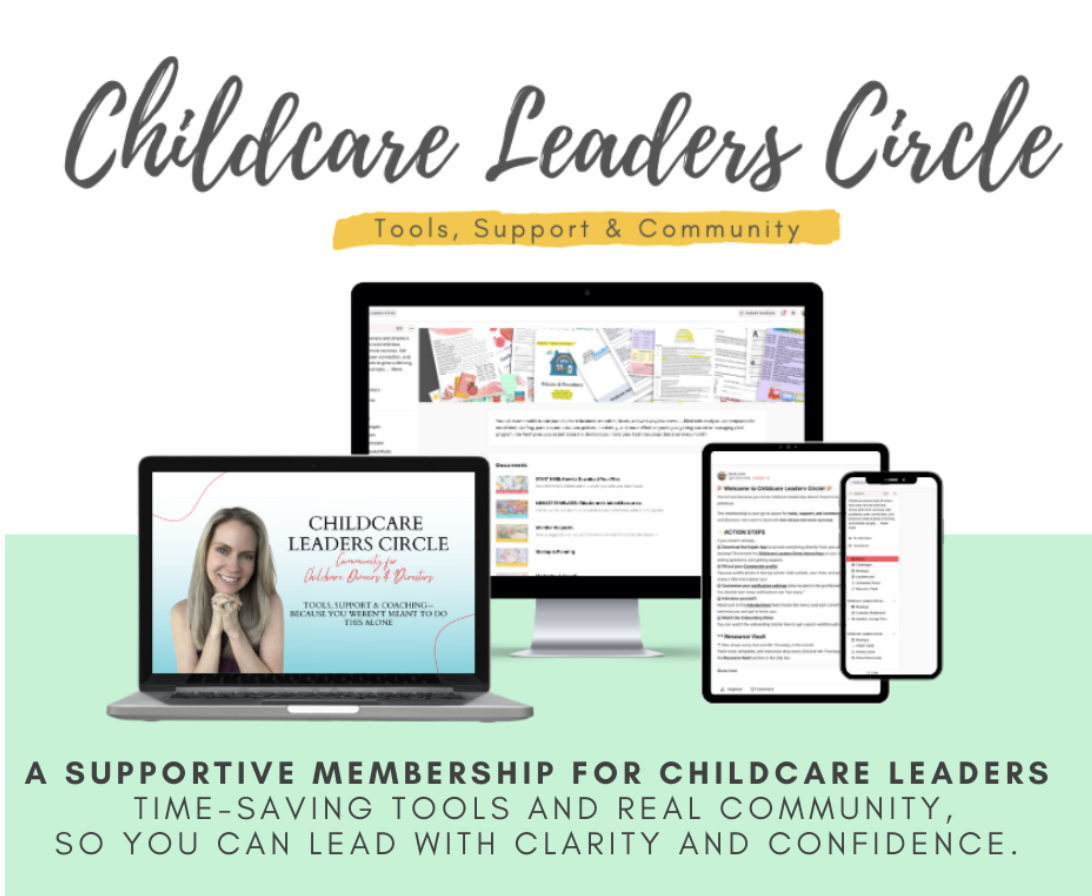
That's why I created the Childcare Leaders Circle.
It's a membership community for childcare owners and leaders who are done figuring it out alone. Inside, you get real support from people who understand exactly what you're dealing with, plus done-for-you tools and templates so you're not starting from scratch every time something comes up.
You don't have to carry all of it by yourself.
Here are some other articles packed with valuable content you are sure to enjoy:
10 Ways To Increase Revenue In Your Daycare Business
6 Must-Do’s To Effectively Communicate To Staff
How To Avoid Burnout in Childcare
How To Screen Families For Your Daycare
6 Tips To Ace Your Licensing Inspections
30 Daycare Policies You Need in Your Parent Handbook
Important Daycare Forms You Need For Your Childcare Business
How To Deal With Parents Who Consistently Pay Tuition Late!
The 12 Most Common Child Care Business Mistakes
One Surefire Way to Boost ECE Staff Retention

Download my FREE Family Screening Guide to select the families right for you.
Download this guide to help you carefully accept the right families and avoid the high-maintenance ones. Includes 13 questions and a Family Information Card for easy follow-up.


Grab my FREE Daily Schedules for Infants, Toddlers, & Preschoolers!
Download 3 PDF schedules designed for each age; Infants, Toddler, and Preschoolers. A Canva link is provided to edit the schedules for your program. It’s absolutely free and only takes 5 seconds!



Download my FREE Daycare Starter Guide to start your own childcare business.
If you don’t know where to start, this guide is perfect for you! Click the button to get instant access. It’s super easy and absolutely free!




Grab my FREE Fill Your Spots Fast Enrollment Audit and quickly uncover what’s missing in your process so you can start filling your open spots consistently.